When National Outbreaks Reach Rural Michigan
What 2026’s Measles and Foodborne Illness Warnings Mean for St. Joseph County
Two public health stories made national headlines this year. Measles deaths in Pennsylvania. A multistate E. coli and Salmonella outbreak tied to alfalfa sprouts. Both can feel far away from St. Joseph County.
They aren't. Public health is local even when the headline is national.
In rural communities like Three Rivers, Sturgis, Mendon, White Pigeon, Constantine and beyond, outbreaks hit harder when timely care, transportation, and hospital capacity are already stretched thin. That's exactly where St. Joseph County stands in 2026, following the closure of Sturgis Hospital, with Beacon Health System Three Rivers now serving as the region's key access point for emergency and inpatient care.
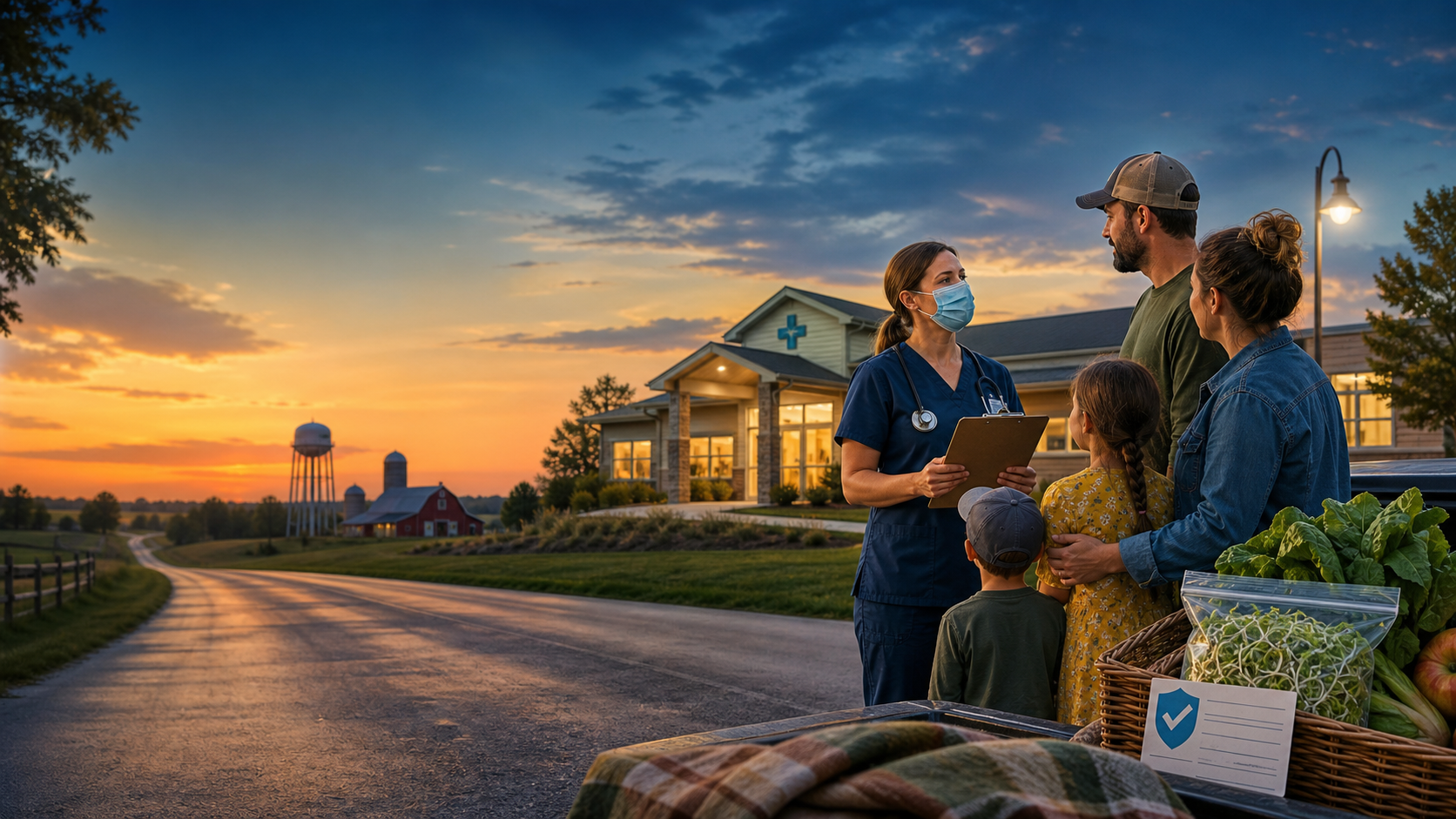
AI generated image
Measles Is a Local Readiness Test
In late August, Pennsylvania health officials confirmed two measles related deaths in unvaccinated Lancaster County residents, the state's first measles deaths in 35 years and the first measles associated fatalities reported anywhere in the country in 2026. Federal officials were still reviewing whether measles caused or contributed to the deaths, but the cases are a serious reminder that this disease is far from routine.
Measles spreads fast. A person can pass it on starting four days before a rash appears and for four days after, which makes early recognition and quick isolation critical. Two doses of the MMR vaccine are about 97 percent effective at preventing it.
Michigan has already had to respond this year. In March, the state health department confirmed a measles outbreak in Washtenaw County, and in April it recommended an early MMR dose for certain infants in several southeast Michigan counties, a measure that ended in May once officials confirmed no further spread.
St. Joseph County doesn't have a known measles outbreak right now. But the statewide experience shows how fast a single cluster can demand a coordinated response from families, schools, clinics, and local health departments.
Why measles hits rural communities harder
A measles exposure isn't just about whether one person gets sick. An unvaccinated child exposed at school or a family gathering may need to stay home during an exclusion period, which can cost parents work hours. Clinics need to separate potentially infectious patients before they reach the waiting room, and older adults, infants too young to be vaccinated, and pregnant people need extra protection. Local public health staff have to track down contacts and get people vaccinated, fast, and in a county where health care keeps getting more centralized, the gap between symptom onset and actual care can widen quickly.
For a Sturgis resident, that gap just got bigger. Sturgis Hospital stopped seeing patients on June 19, 2026, closing its emergency department, surgery, lab, imaging, and outpatient clinics after years of financial strain. Emergency patients are now directed to Beacon Health System Three Rivers, Parkview LaGrange Hospital in Indiana, or Insight Hospital Coldwater. Beacon says its Three Rivers facility is the nearest full service Michigan hospital to Sturgis, about 20 miles away. That distance doesn't sound like much until you're a family without reliable transportation, a parent managing sick kids, or someone dealing with dehydration or trouble breathing.
The Sprout Outbreak Shows Food Risk Doesn't Stay Put
The second story is an ongoing FDA and CDC investigation into a multistate outbreak of Shiga toxin producing E. coli and Salmonella linked to alfalfa sprouts. As of the FDA's August 28 update, 55 people across 15 states had gotten sick, including four hospitalizations, and Michigan is one of the states with reported cases. Investigators traced the illnesses to alfalfa sprouts distributed by Everything Sprouts, LLC, of Minneapolis. Among 34 people interviewed, 26, or 76 percent, said they'd eaten alfalfa sprouts before getting sick. The FDA's advice is simple: don't eat, serve, or sell recalled alfalfa sprouts sold under the Calco and Everything Sprouts brands.
Foodborne illness doesn't respect state lines. Food travels through wholesalers, stores, restaurants, family gatherings, and everyday travel. Someone in Three Rivers might shop in Kalamazoo. A Sturgis resident might eat in Indiana. A family in White Pigeon, Mendon, or Constantine could run into a recalled product through a grocery run or a restaurant meal.
What to watch for
Both E. coli and Salmonella cause diarrhea and cramping. E. coli can also cause vomiting and bloody stool, while Salmonella often brings fever. Seek medical care for bloody diarrhea, a fever above 102 degrees, diarrhea lasting more than two days without improvement, vomiting that won't let you keep fluids down, or signs of dehydration.
For rural households, severe diarrhea and vomiting can turn dangerous fast for young kids, older adults, and people managing chronic conditions, and a delay in care can turn a manageable illness into something much harder to treat. Don't assume every stomach bug is just a stomach bug, especially after eating a recalled product or if several people from the same meal get sick. Call a provider early, and if it's an emergency, call 911 rather than driving long distances while seriously ill.
Rural Health Is More Than a Hospital
The Sturgis Hospital closure shows why public health and health care access have to be thought about together. Losing a hospital doesn't just affect major emergencies. It affects the everyday systems that make outbreak response work, from lab access and clinician availability to transportation and basic public confidence about where to go.
The hospital pointed to falling reimbursement rates, rising costs, and declining patient volume as the reasons for closing, pressures that aren't unique to Sturgis. Rural hospitals across the country run on thin margins, struggle to recruit staff, and serve populations that tend to be older, poorer, and farther from specialty care.
The impact looks different depending on where you live in the county. Sturgis residents now face a longer route to full emergency care, Three Rivers carries more pressure on its hospital as care shifts from Sturgis, and Mendon, White Pigeon, and Constantine all deal with longer trips and more dependence on family, EMS, and local public health.
What St. Joseph County Can Do
None of this calls for panic. It calls for preparation.
Families can check MMR immunization records now, before a school notice or exposure forces the issue, through their child's provider, the local health department, or the Michigan Care Improvement Registry public portal. It's also worth having a real plan for transportation and knowing the nearest appropriate emergency department.
Schools, childcare programs, and employers should review their notification procedures now, not after an exposure. A good notice tells people what happened, what symptoms to watch for, and who to call. Restaurants, grocery stores, and event organizers should watch FDA recall notices and train staff to flag possible illness clusters.
Local government and health agencies should treat prevention infrastructure as essential infrastructure. The Branch-Hillsdale-St. Joseph Community Health Agency continues to provide preventive public health services in the region, including immunizations, and that work matters even more as hospital based access narrows. Health care organizations and EMS providers also need to give residents clear guidance on where to go for urgent care, emergency care, and testing, so Sturgis residents aren't figuring out the new care pathway in the middle of a crisis.
Public health is local, even when the headline is national. St. Joseph County faces real rural distance and a changing hospital landscape, but also a real opportunity to prepare. Vaccinate. Watch the recalls. Seek care early when something feels wrong. Strengthen the local systems people depend on before the next outbreak stops being someone else's news.
What would it take to make sure every household in St. Joseph County knows where to go for care, no matter which town they live in?
Sources: