Sturgis Hospital Is Gone
Here's What That Means for St. Joseph County
Sturgis Hospital closed its doors on June 19, 2026. After more than a hundred years of serving this community, that's not a small thing. It's a loss.
News coverage sources:
Note: A community round table event is scheduled for Tuesday evening, 7/28/26 at 6:30pm at the Sturges-Young Auditorium in Sturgis. Christian Vukasovich, US House District 5 candidate, is hosting this town hall to hear from you. Share your thoughts and concerns as to help identify steps we can take to secure healthcare for our communities.
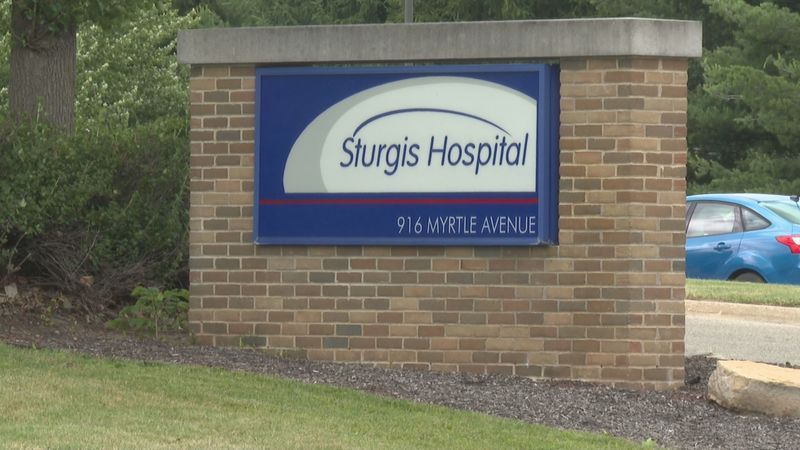
Courtesy: WWMT
For a lot of families in St. Joseph County, this hospital wasn't just a building. It was where you went when your kid spiked a fever at midnight, where you got your annual imaging done, where you went for physical therapy after a knee replacement. Now that option is gone, and the ripple effects reach every corner of the county.
Let's walk through what happened, why it happened, and what it means for the people who live here.
What closed, exactly
This wasn't a partial shutdown. The hospital's emergency department, surgery services, lab, medical imaging, physical therapy, cardiac rehab, outpatient clinics, and endoscopy services all stopped operating at once.
That's a full range of care disappearing from the community in a single day.
Why it happened
Hospital officials pointed to years of financial strain: declining reimbursement rates, rising operating costs, and a steady drop in how many patients were coming through the doors.
If that sounds familiar, it should. Reporting on rural Michigan hospitals keeps circling back to the same pressures: shrinking patient volumes, workforce shortages, and reimbursement rates that don't keep pace with the actual cost of care. Some coverage has called it a "perfect storm." There's also concern that pending Medicaid funding reductions could put even more strain on the hospitals still standing. We’ve even written about it before: Rural Hospitals Face a Funding Crisis
Rural hospitals tend to serve smaller populations and see more Medicare and Medicaid patients than larger systems. That means thinner margins from the start. When costs climb faster than payments come in, even a hospital with a hundred years of history can run out of room to absorb the losses.
What this means for you, right now
Here's the part that matters most. If you have a medical emergency in Sturgis today, you're no longer heading to a hospital five minutes down the road. You're being directed to Three Rivers, Coldwater, or LaGrange, Indiana.
A few things that used to be simple just got harder:
Emergency response takes longer. What used to be a short ambulance ride is now a much longer trip. That ties up local emergency crews and can delay care for the next person who needs help.
Routine care gets split up. Imaging, lab work, rehab, and outpatient procedures now mean juggling multiple locations instead of one.
Transportation becomes a real barrier. For older adults, people managing chronic conditions, and families without reliable vehicles, "just drive to the next town" isn't always realistic.
None of this is hypothetical. It's already happening.
The strain doesn't stop at the county line
Nearby hospitals are about to feel this too. As Sturgis patients shift toward Three Rivers, Coldwater, and LaGrange, those emergency rooms and clinics are likely to see more volume, longer wait times, and more pressure on staff who are already stretched thin.
One hospital closing doesn't stay a local story. It becomes a regional one.
Beyond health care: the economic hit
A hospital closure isn't just about medical access. It's about jobs, too.
Rural hospitals are often among the largest employers in their communities. When one closes, that's a direct hit to local income, to the businesses that depend on hospital employees as customers, and to the county's ability to attract new residents and investment.
Sturgis didn't just lose an emergency room. It lost an economic anchor.
What comes next
This is part of a bigger pattern across rural Michigan. As health systems narrow their services or shut down entirely, the distance between where people live and where they can get timely care keeps growing.
For St. Joseph County, the challenge now isn't just finding a way to replace one hospital. It's protecting access to care in a region where the options were already limited before this closure.
That's a heavy lift. It's going to take local leaders, health systems, and community organizations working together, and it's going to take time.
What would it take to close this gap for St. Joseph County? And who needs to be at the table to make that happen?