How Washington's Corruption Harms St. Joseph County
Trump’s Corruption Affects Us All
A late-2026 Reuters/Ipsos poll finds that a lot of Americans believe President Trump's private business interests are shaping decisions made from the White House. That's not just a Washington story. Federal decisions about prices, public services, agriculture, health, infrastructure, and disaster preparedness eventually land on our doorsteps, from Burr Oak and Colon to Constantine, Mendon, White Pigeon, Sturgis, Three Rivers, and Centreville.
Here's what the poll found. Out of every 10 Americans surveyed, 7 said they believe Trump's business interests influence his presidential decisions. Sixty-three percent said it's inappropriate for Trump and his family to profit from cryptocurrency since he returned to office. Reuters/Ipsos surveyed 1,166 U.S. adults August 14 through 17, with a margin of error of 3 percentage points.
The White House disputes any conflict of interest. Their line is that the president's investments are independently managed and that he's acting in the public interest. Fair enough, that's their position. But the public's concern points to something bigger that should matter in every community: when people with wealth and connections get special access, who's left waiting?
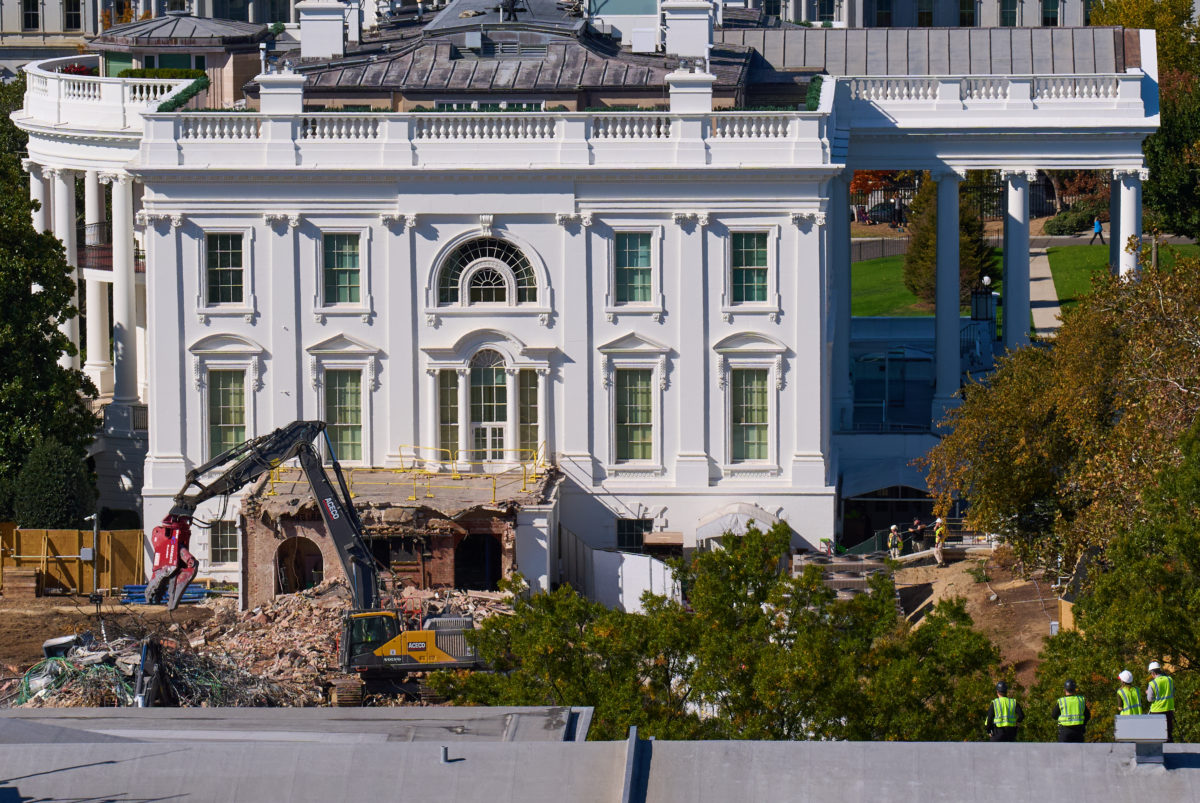
From crypto gifts to corrupt government contracts, the Trump presidency is destroying our democracy. Source: PBS
Why this matters locally
St. Joseph County isn't Washington, D.C. We're a county of small towns, rural townships, farms, family businesses, public schools, libraries, local government offices, and folks trying to make a living. That includes residents of Burr Oak, Colon, Fabius and Fawn River Townships, all the way to Sturgis and White Pigeon.
For every St Joe County neighbor, corruption isn't an abstract political word. It shows up in practical ways:
Federal programs that help farmers, small businesses, veterans, families, and local agencies get less reliable.
Health, environmental, consumer protection, and severe weather services get weaker.
Policy favors major corporations while households absorb higher costs.
Public dollars get steered toward politically connected businesses instead of community needs.
Fraud victims and taxpayers lose protections when enforcement gets cut back.
Citizens for Responsibility and Ethics in Washington has been tracking this closely. Their reporting argues the administration's approach has weakened accountability and shifted government power toward wealthy donors, corporations, and the president's own business interests. CREW's report flags cuts to public-facing federal services, government spending at Trump-owned properties, favorable access for major donors, conflicts involving private financial interests, and reduced pursuit of certain fraud cases.
What residents feel
When Washington makes choices that put private profit ahead of the public good, the effect doesn't stay contained to one city or one agency.
Think about a farmer in Leonidas or Constantine. Uncertainty about federal programs and research that support agriculture isn't an abstraction, it's next year's planting decisions. Think about a family in Sturgis, Nottawa, or Lockport Township. Higher costs and weaker consumer protections hit the grocery bill and the doctor's office. Think about local leaders in Centreville or any of our townships. When federal support gets delayed, cut, or redirected, they're the ones asked to do more with less.
CREW specifically warns that cuts to federal agencies can affect public health safeguards, weather tracking, support for farmers, and fraud recovery, the kind of functions people depend on without always seeing them directly.
The point isn't that every federal program works perfectly. It doesn't. The point is that government should answer to the public, not to a president's financial interests, the biggest political donors, or corporations that can buy access.
It adds up over time
None of this shows up as one dramatic headline. It shows up as a grant that gets delayed six months. A rural clinic that has to trim hours because a reimbursement formula changed. A township road project that gets pushed to next year because the funding stream got redirected somewhere else. A small business owner who can't get a straight answer from a federal agency because staff got cut.
That's the pattern CREW is describing when it talks about weakened accountability. It's not one big scandal. It's a hundred small ones, spread across a hundred communities that don't have lobbyists in Washington working on their behalf. St. Joseph County is one of those communities.
A basic standard
People in St. Joseph County get it. Public service is supposed to mean serving the public. That's not a partisan idea, it's just common sense.
We should expect the President, members of Congress, state officials, county commissioners, township boards, and every elected leader to put the public interest first. That means transparency, real ethics rules, strong independent oversight, fair enforcement of the law, and decisions grounded in what helps ordinary people, not what enriches the powerful.
And here's the thing, this concern crosses party lines. The Reuters/Ipsos poll found that half of Republican respondents, along with two thirds of Independents and nine in ten Democrats, said they believe Trump's business interests influence his decisions as president.
That doesn't mean every voter agrees on every policy, and it shouldn't. But we can agree on a basic principle: no one elected to serve the public should treat public power as a private business opportunity.
St. Joseph County deserves a government that listens to people in Burr Oak and Centreville just as much as it listens to billionaires and corporate lobbyists.
Sources: