Rural Hospitals Face a Funding Crisis
It's Expected to Get Worse
The challenges rural communities face regarding healthcare access and rights are mounting. Hospital closures and the need for improved healthcare infrastructure affect all St. Joe County residents, who may experience barriers in accessing quality healthcare services.
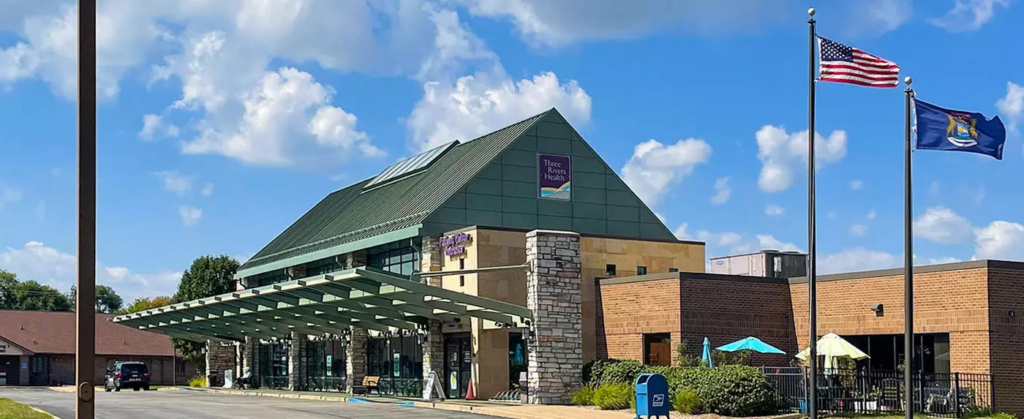
Exterior of a rural hospital in Three Rivers
A person in White Pigeon has a heart attack. A farm worker outside of Sturgis breaks an arm. A grandmother in Burr Oak has a fall. A child in Colon nearly drowns in the river.
In each of these terrible situations, the closest hospital is not a guarantee. It's a lifeline that is increasingly fragile. A new analysis from the Commonwealth Fund makes clear that the pressure on rural healthcare is growing, not easing.
More than 200 rural hospitals have completely or partially closed since 2005, with 400 more currently at risk of closure. Residents in remote areas of the U.S. face increasing barriers to critical health services. Additionally, changes to national health policy, including Medicaid work requirements and the elimination of ACA enhanced premium tax credits, are expected to further erode rural healthcare services.
Southwest Michigan isn’t immune. St. Joseph County is home to Beacon Health System, which serves communities from Three Rivers to Colon to White Pigeon, and whose emergency care, obstetrics, and specialty services many residents depend on as the only realistic option for miles around. But the financial ground beneath facilities like this is shifting.
The Structural Problem
A larger share of rural than urban residents are insured by public payers such as Medicare and Medicaid, which typically reimburse less for services than private payers. Within Medicare, an increasingly large share of rural patients are enrolled in Medicare Advantage plans. Those plans tend to have lower provider payment rates than traditional Medicare and higher rates of claims denials. Fewer patients and lower reimbursement rates mean nearly half of rural hospitals operate on negative or close-to-negative margins.
Michigan mirrors this national pattern. A study by the Center for Healthcare Quality and Payment Reform found that 13 rural hospitals in Michigan were at risk of closing, and that one in five rural hospitals in the state reported negative margins on the services they provided (The Detroit News). Many of Michigan's rural counties have higher rates of residents enrolled in Medicaid than most urban areas, while the vast majority of those counties spent more money per enrollee than urban counties.
Medicaid is a lifeline for rural health facilities and health systems serving a large percentage of working-class families.
That lifeline is now under serious threat.
What the New Law Means
Last summer, Congress passed and President Trump signed a sweeping budget reconciliation bill that included significant Medicaid cuts alongside a new $50 billion Rural Health Transformation Fund. The framing was that the fund would offset the damage to rural communities. Many health policy experts say it won't come close.
The new law will reduce federal Medicaid spending by $911 billion over ten years and lead to 10 million more people becoming uninsured by 2034, according to Congressional Budget Office estimates. The Rural Health Transformation Fund provides $10 billion per year for five years, and nearly two-thirds of the ten-year reductions in federal Medicaid spending would occur after fiscal year 2030, after the fund is exhausted.
In plain terms: the relief money runs out before the worst of the cuts hit.
For Michigan, nearly 300,000 residents will lose their health insurance under Medicaid starting in 2027 because of the bill, according to a Department of Health and Human Services report. The Michigan Health and Hospital Association has called the legislation "disastrous for access to care," estimating it will cost Michigan hospitals more than $6 billion in total Medicaid funding over the next ten years. When hospitals have to cut services because Medicaid is cut, those services are lost for all patients — not just those covered by Medicaid.
The Insurance Cliff
The damage doesn't stop with Medicaid. Enhanced premium tax credits for ACA marketplace plans expired at the end of 2025. Without these credits, which subsidize the cost of ACA marketplace health insurance, fewer people will be able to afford coverage, and rural hospitals could lose an additional $1.6 billion in patient revenue nationally.
Across 1,730 rural hospitals, the expiration of those tax credits is estimated to cause uncompensated care costs to increase by more than 10 percent and operating margins to decline by nearly 10 percent in 2026, further eroding margins for already struggling hospitals.
For St. Joseph County residents, many of whom work in manufacturing, agriculture, or service jobs that don't offer employer-sponsored insurance, losing an affordable marketplace option isn't abstract. It means going without coverage, or showing up to the emergency room when a condition has become critical, unable to pay.
The Cascading Effects on Communities
University of Michigan professor Michael Shepherd put it bluntly: "When you're operating on a negative margin and suddenly 20% of your budget is drastically shrunk, that is going to be pretty devastating for the continued survival of rural hospitals all across the country."
When a rural hospital cuts services or closes, the consequences extend far beyond healthcare. Emergency response times lengthen. Pregnant women face longer drives for obstetric care. Elderly residents lose access to the specialists they see regularly. And the hospital, often one of the largest employers in a small county, stops being a source of local jobs.
People living in rural areas travel further for appointments and are more likely to miss out on needed healthcare because of trouble finding transportation, while lower rates of internet connectivity can limit access to telehealth services. And higher uninsured rates in rural areas can strain hospital finances by increasing the share of uncompensated care, further contributing to rural hospital closures and provider shortages.
A Window… If It's Used
The $50 billion Rural Health Transformation Fund does offer a narrow opportunity, but it is not a straightforward lifeline. At least 10 states have submitted plans under the fund that could lead rural hospitals to cut services in order to continue affording essential and emergency care. A senior adviser at the Commonwealth Fund has cautioned that if the end result is high-margin services being taken away from local hospitals with nothing given back in return, it can be financially harmful (NPR).
Michigan's share of the fund and how state health officials decide to deploy it will matter enormously for communities like those in St. Joseph County. The decisions being made in Lansing and Washington right now about Medicaid work requirements, provider taxes, and hospital reimbursement rates will determine whether rural clinics in the county can maintain the services that residents depend on.
The crisis described in national reports is not a distant abstraction. It is already arriving here. You’ve probably experienced longer wait times, seen stretched staff, or noticed the quiet arithmetic of hospitals trying to stay open on margins that are already thin.
What happens next depends in large part on whether policymakers treat rural healthcare as the essential infrastructure it is.
Looking for more news and how it affects St Joe County?
Sources: Commonwealth Fund, KFF, Michigan Health & Hospital Association, Detroit News, Center for Healthcare Quality and Payment Reform, Georgetown University Center for Children and Families.