Left Behind in the Digital Age
The Internet Divide Hits Close to Home in St. Joe County
A Pew Research Center report finds that who you are and where you live still determines whether you're connected. And for rural southwest Michigan, that gap has real consequences.
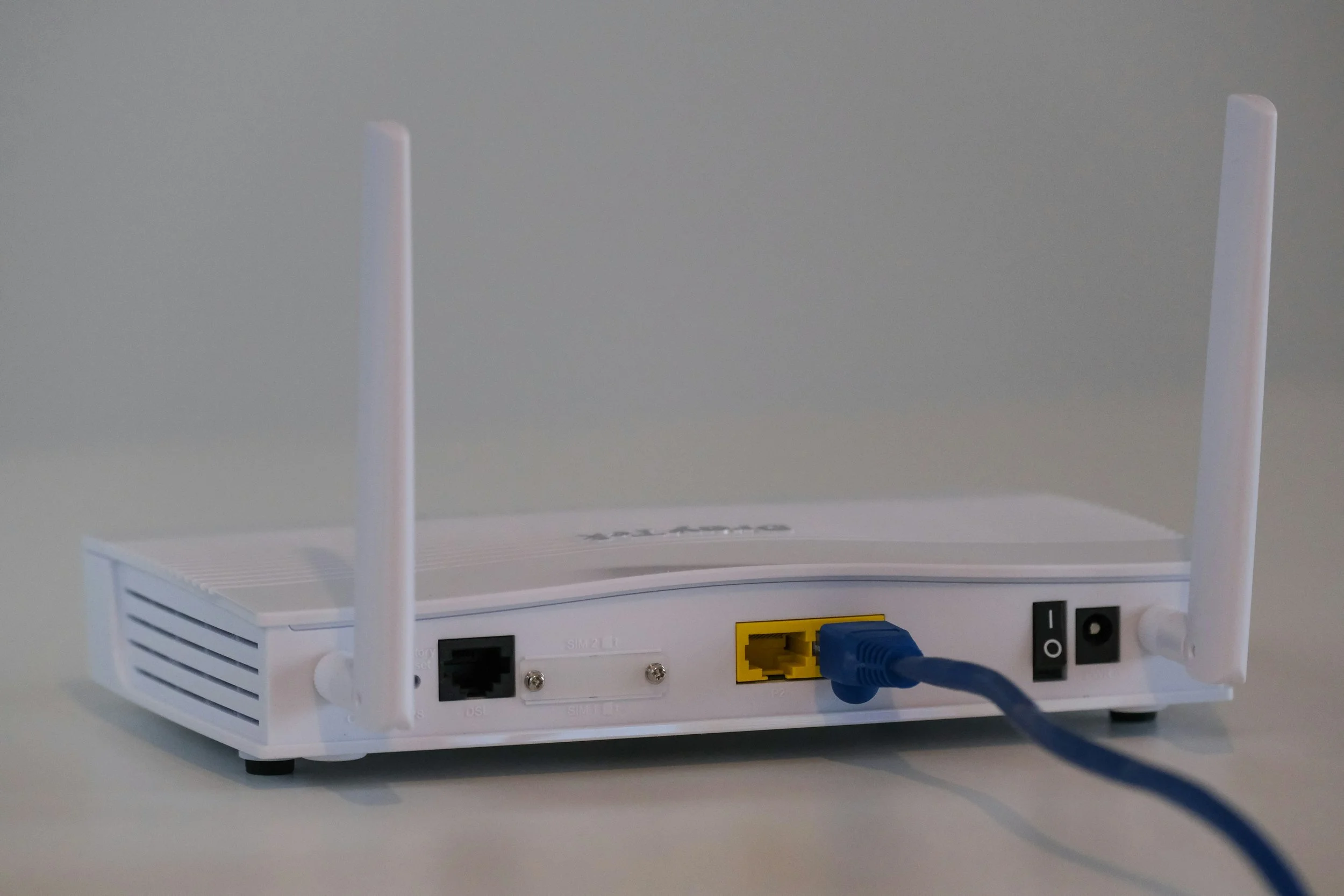
Today, most Americans subscribe to home broadband internet and own a smartphone. About four-in-ten describe their internet use as almost constant. But use of these technologies is not universal. Income and location cause major disparities.
Most Americans now take the internet for granted. It's how they make doctor's appointments, apply for jobs, help their kids with homework, and pay their bills. But for a significant share of residents in St. Joseph County, particularly older adults, lower-income households, and families scattered across rural townships, reliable, fast internet at home remains out of reach or out of budget.
A new analysis from the Pew Research Center, released in January 2026, puts hard numbers to what many here already know from lived experience: the digital divide is real, it persists, and it falls hardest on the people who can least afford to be left behind.
What the National Numbers Show
Today, about eight-in-ten Americans say they subscribe to broadband at home. But that figure masks enormous gaps. Americans in households making under $30,000 a year are far less likely than those with higher incomes to subscribe to home broadband. In this lowest-income group, 54% do, compared with 94% of those in the highest-income households — a 40 percentage point gap.
The age divide is equally stark. While 97% of adults under 50 and 90% of those ages 50 to 64 have a smartphone, adults 65 and older are least likely to own one, though 78% of them still do. Constant connectivity tells a similar story: a majority of adults ages 18 to 29 say they're online almost constantly, but that share falls to just 14% of those 65 and older.
And for rural communities specifically, rural adults remain less likely than suburban adults to have home broadband, and less likely than urban adults to own a smartphone, tablet, or computer.
Why This Matters Especially in St. Joe County
St. Joseph County sits at the intersection of nearly every category Pew identifies as most vulnerable to the digital divide. The county's median household income is about $66,425. That’s roughly 80% of the national median. And a significant portion of the county's roughly 61,000 residents are older adults, agricultural workers, and manufacturing employees who may not have grown up with digital technology woven into their daily lives.
Our county is also overwhelmingly rural. Most of its land area is made up of small townships with no urban core, where internet infrastructure has historically been slow to arrive and expensive to build.
While portions of the southwest Michigan region currently have some form of high-speed internet available, there are still significant barriers preventing widespread adoption and the utilization of broadband to its fullest potential. That's the assessment of the Southwest Michigan Planning Commission, which has been working to address the connectivity gap across the region.
The good news is that progress is underway. Midwest Energy & Communications submitted a $56.4 million application for ROBIN funding to expand internet service in Berrien, Cass, St. Joseph, and Van Buren counties, bringing fiber service to nearly 7,000 unserved and underserved addresses. And Michigan secured $1.559 billion in federal BEAD program funds to close the digital divide and connect more than 244,000 unserved and underserved locations across all 83 counties (Bridge Michigan).
The bad news is that infrastructure buildout takes years, and even when the lines are laid, affordability remains a barrier. Nationally, between 3% and 8% of households where broadband is available do not subscribe because of cost or choice. In a county where median incomes trail state and national averages, that cost barrier matters enormously.
The Stakes: What Being Offline Actually Costs
The digital divide is not merely an inconvenience. In 2026, being disconnected from reliable internet affects nearly every dimension of a person's life.
Healthcare. As we've reported, rural healthcare access is already strained in St. Joseph County. Telehealth has become one of the most promising tools for extending care to rural residents who face long drives to see specialists. But telehealth requires a reliable connection. Older adults, rural residents, and low-income patients face the greatest barriers to accessing telehealth services, even as approximately 80% of healthcare providers have now offered it. A senior in Colon Township trying to follow up with a cardiologist in Kalamazoo via video call, but without home broadband, faces an impossible choice.
Education. For families with school-age children, the so-called "homework gap" (the divide between students who have internet at home and those who don't) is one of the starkest inequities in public education. Students with high-speed home internet access have an overall GPA of 3.18, significantly higher than the average 2.81 GPA for students with no home access and 2.75 for students with only cell phone access, according to data from the Michigan Office of High-Speed Internet. In rural districts across St. Joe County, teachers know exactly which students go dark when the school day ends.
Jobs and Economic Opportunity. Remote work, once an urban luxury, has become a mainstream employment option in many fields… but only for those with a fast, stable connection at home. For residents in townships outside Three Rivers or Sturgis, the inability to work remotely limits economic mobility. Career training increasingly happens online. Workers without digital access to skill-building courses and certifications can't stay competitive.
Civic Life. Filing for government benefits, renewing a driver's license, accessing FMLA paperwork, applying for SNAP or Medicaid. These services were once handled in person are rapidly moving online. Those without home internet must either find public wi-fi, borrow a neighbor's connection, or simply go without.
Smartphone Dependency Isn't the Same as Connected
One important nuance in the Pew data is the distinction between having a smartphone and having broadband. Many lower-income residents who lack home internet have become "smartphone dependent," relying on a phone's data connection as their only pathway online. Young adults, Hispanic adults, and those with lower incomes are most likely to rely on smartphones for internet rather than a home broadband subscription.
A smartphone can do a lot. But it cannot replicate what a home broadband connection makes possible. Job applications, telehealth visits, video calls with a grandchild, schoolwork requiring a full keyboard. These are cumbersome or impossible on a small screen with a data cap and spotty rural cell service. In many parts of St. Joseph County, cell coverage itself is unreliable, making smartphone dependency a fragile lifeline at best.
What's Next; What Could Help
The fiber buildout underway through MEC and federal BEAD funding represents real progress for St. Joe County. But infrastructure alone won't close the divide. Affordability programs, digital literacy training, and device access for lower-income households are equally essential pieces.
Michigan's Digital Equity Plan, developed with input from over 800 state residents, aims to address affordability, accessibility, and digital skills, particularly in rural communities, seeking to eliminate barriers to access statewide by 2030. That goal is achievable, but it requires sustained investment and local awareness of what's at stake.
For St. Joseph County residents who want to learn more about internet expansion projects, eligibility for low-cost broadband programs, or digital skills training opportunities, the Southwest Michigan Planning Commission and county MDHHS office are both useful starting points. Connectivity isn't a luxury. For working families, older adults, and students here, it's the foundation everything else is being built on.
Want more local flavor to the national headlines?
Sources: Pew Research Center, Southwest Michigan Planning Commission, Midwest Energy & Communications, Michigan High-Speed Internet Office, Bridge Michigan, U.S. Census Bureau ACS 2024.